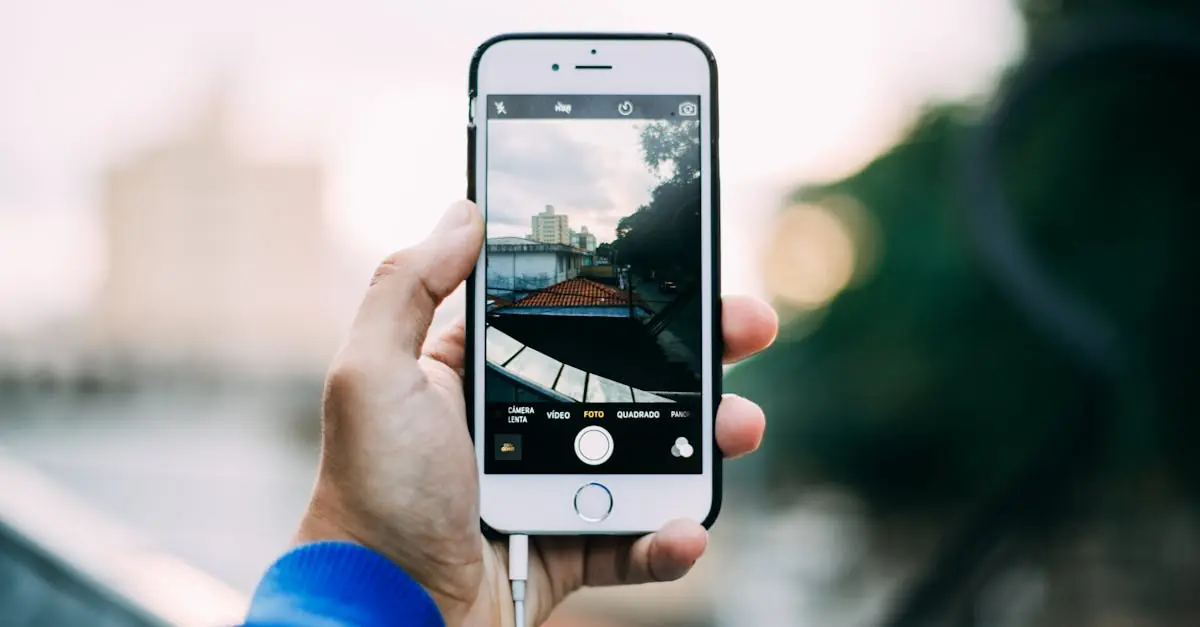
Ever found yourself drowning in a sea of high-resolution photos on your iPhone? While those stunning images can make your friends jealous, they can also eat up precious storage space faster than you can say “iCloud.” If you’ve ever wondered how to lower the quality of your pictures without sacrificing your sanity, you’re in the right place.
Table of Contents
ToggleUnderstanding Picture Quality on iPhone
Picture quality on an iPhone refers to the resolution, clarity, and detail captured in images. Apple’s devices offer high-resolution photos, typically at 12 MP or higher, allowing users to take stunning shots. However, high-quality pictures consume more storage space. As a result, managing storage becomes crucial for users.
JPEG format serves as one option for saving images, providing a balance between quality and file size. By using this format, users maintain adequate picture quality while reducing storage demands. Users can also enable the “Optimize iPhone Storage” setting in iCloud Photos, automatically managing photo sizes based on available storage.
Adjusting camera settings is another way to lower picture quality. Reducing the resolution in the camera settings allows users to take images at a lower quality, saving space. Furthermore, disabling HDR (High Dynamic Range) prevents the camera from capturing multiple exposures, yielding smaller file sizes.
Editing apps can also play a role in picture quality. Users can choose to lower the quality of existing photos by resizing or compressing them within the app settings. Apps like Image Size or Photo Compress offer straightforward options to reduce file size without drastically affecting image aesthetics.
Finally, users can consider using third-party cloud storage services for backup. By offloading high-resolution images to platforms like Google Photos or Dropbox, users can free up device storage while keeping their favorite moments accessible. Managing picture quality effectively ensures users can enjoy their iPhones without constantly worrying about storage limits.
Methods to Lower Picture Quality
Reducing picture quality on an iPhone can help manage storage effectively. Several methods exist to achieve this, focusing on camera settings and photo formats.
Adjusting Camera Settings
Lowering the resolution in camera settings directly impacts image quality. Users can access the Camera app, navigate to settings, and choose lower resolution options like 720p instead of 1080p. Disabling HDR captures images with less detail, thus saving space. Switching to standard photo mode offers simpler file sizes compared to Live Photos. Additionally, opting for burst mode can capture multiple images, making it easier to select lower quality in editing.
Changing Photo Format
Utilizing the JPEG format significantly lowers file sizes while maintaining acceptable quality. Users can change formats in the Settings app, selecting “Camera” and then “Formats” to switch to High Efficiency. This selection compresses images, resulting in smaller files. For those who prefer editing, software options like ImageOptim effectively convert file types to enhance compatibility with many applications. External cloud services provide storage options, allowing users to offload larger formats while retaining accessibility.
Using Third-Party Apps
Third-party apps provide valuable options for reducing image quality on iPhones. Many users find these tools effective for managing photo storage without sacrificing too much detail.
Recommended Apps for Lowering Quality
- Image Compressor: This app allows users to resize and compress images easily. It supports various formats, including JPEG, and offers batch processing for multiple photos at once.
- JPEGmini: JPEGmini shrinks file sizes significantly while maintaining visual quality. It specializes in optimizing JPEG images, making it a great choice for those who want to save space without losing clarity.
- Snapseed: Offers advanced editing capabilities, including the ability to resize photos before saving. Users can adjust quality settings to find the best balance between size and detail.
- Photo Resizer: Simple and user-friendly, this app enables quick adjustments to image dimensions. Users select their desired resolution, making it an efficient tool for reducing file size.
- Compress Photos: This app specializes in compressing multiple images simultaneously. It’s perfect for users looking to streamline their photo library with minimal effort.
These applications enhance users’ ability to manage iPhone storage without compromising too much on photo quality.
Managing Storage Space
Managing storage space on an iPhone proves essential for users handling numerous high-resolution images. Adjusting camera settings lowers both resolution and file size, directly impacting storage consumption. Setting the camera to shoot in JPEG format helps maintain a balance between picture quality and manageability.
Enabling the “Optimize iPhone Storage” setting ensures that iCloud Photos automatically adjusts image sizes. Users benefit from keeping their full-resolution images in the cloud, freeing up local storage while still accessing photos anytime.
Besides basic settings, third-party apps provide additional options for managing photo quality effectively. Image Compressor allows users to resize images easily, while JPEGmini focuses on optimizing JPEG images without sacrificing visual quality. Snapseed’s advanced editing capabilities help refine images, ensuring they take up less space.
Adjusting video settings can also impact storage. Choosing a video resolution of 720p rather than higher settings saves substantial space. Users should remember that disabling HDR can further conserve storage on photos captured in bright environments.
Leveraging cloud storage services like Google Photos or Dropbox enables offloading high-resolution images. Doing so retains access to cherished memories minus direct storage implications. Users might also consider a regular review of photos and deleting unnecessary ones to reclaim space.
Overall, combining these methods promotes efficient storage management on iPhones while still allowing for the capture of high-quality images.
Lowering the quality of pictures on an iPhone can be a game changer for users struggling with storage issues. By implementing the various strategies discussed, such as adjusting camera settings and utilizing efficient file formats, users can effectively manage their photo library without sacrificing too much visual appeal.
Leveraging third-party apps for compression and resizing further enhances the ability to maintain cherished memories while optimizing device space. Regularly reviewing and organizing photos will also contribute to a more efficient storage experience. With these practical steps, iPhone users can enjoy their devices fully, knowing their storage is under control.